7 Critical Questions to Ask Before Hiring a Construction Contractor in Pakistan
7 Critical Questions to Ask Before Hiring a Construction Contractor in Pakistan
- Q1. Are You PEC-Registered or an Unlicensed Subcontractor?
- Q2. What is Your Policy on Steel & Cement Price Escalation?
- Q3. Can I Inspect an Active, Ongoing Construction Site?
- Q4. What Written Warranties Do You Provide for Structure & Seepage?
- Q5. What is Your Milestone-Based Payment Schedule?
- Q6. Who Supervizes Daily Work—An Engineer or a Petty Mistri?
- Q7. How are Design Variations and Extra Items Billed?
- Contractor Comparison: Licensed Firm vs. Local Theka-daar
- Frequently Asked Questions (FAQ)
The Stakes of Hiring the Wrong Building Contractor
In Pakistan’s residential construction sector, anyone who owns a wheelbarrow and a few shuttering plates can call themselves a “building contractor”. Without mandatory consumer licensing enforcement for small residential plots, the burden of vetting falls entirely on the property owner.
Whether you are constructing a 5 Marla house, a 10 Marla family residence, or an executive 1 Kanal villa, consulting a proven checklist is vital. For comprehensive benchmarking, study our complete guide on how to choose a construction company in Pakistan as well as the top 10 construction companies in Pakistan.
Are you a Pakistan Engineering Council (PEC) registered firm, or an unlicensed local theka-daar?
Why This Matters: PEC registration requires verified graduate civil engineers on the company payroll and strict financial standing. An unlicensed contractor operates outside legal regulatory frameworks; if structural settlement occurs or the foundation cracks, recovering damages in civil courts is nearly impossible.
What to Ask For: Request their valid PEC license certificate and National Tax Number (NTN). If they claim “PEC is only for government highways, not houses”, consider it an immediate disqualifier. Professional firms providing turnkey general contracting services always maintain active engineering registrations.
What is your exact contractual policy on steel, cement, and fuel price escalations?
Why This Matters: In Pakistan’s inflationary climate, fluctuating rebar and cement rates are the #1 catalyst for project abandonment. Unethical contractors deliberately quote artificially low per-square-foot rates to win bids, then halt work halfway through grey structure claiming “darya ka ret mehnga ho gya hai” or “sariya rate barh gya hai”.
What to Insist On: A signed, locked Bill of Quantities (BOQ). The contract must explicitly state whether the agreement is Fixed Lump-Sum (Non-Escalation) or whether price adjustments only apply if national indices fluctuate beyond a specified margin (e.g., ±10%).
Can I visit two of your active construction sites right now without advance notice?
Why This Matters: Completed houses hide structural compromises behind marble tiles and paint. An active, messy site tells you the unvarnished truth about a builder’s engineering discipline.
What to Inspect on Site:
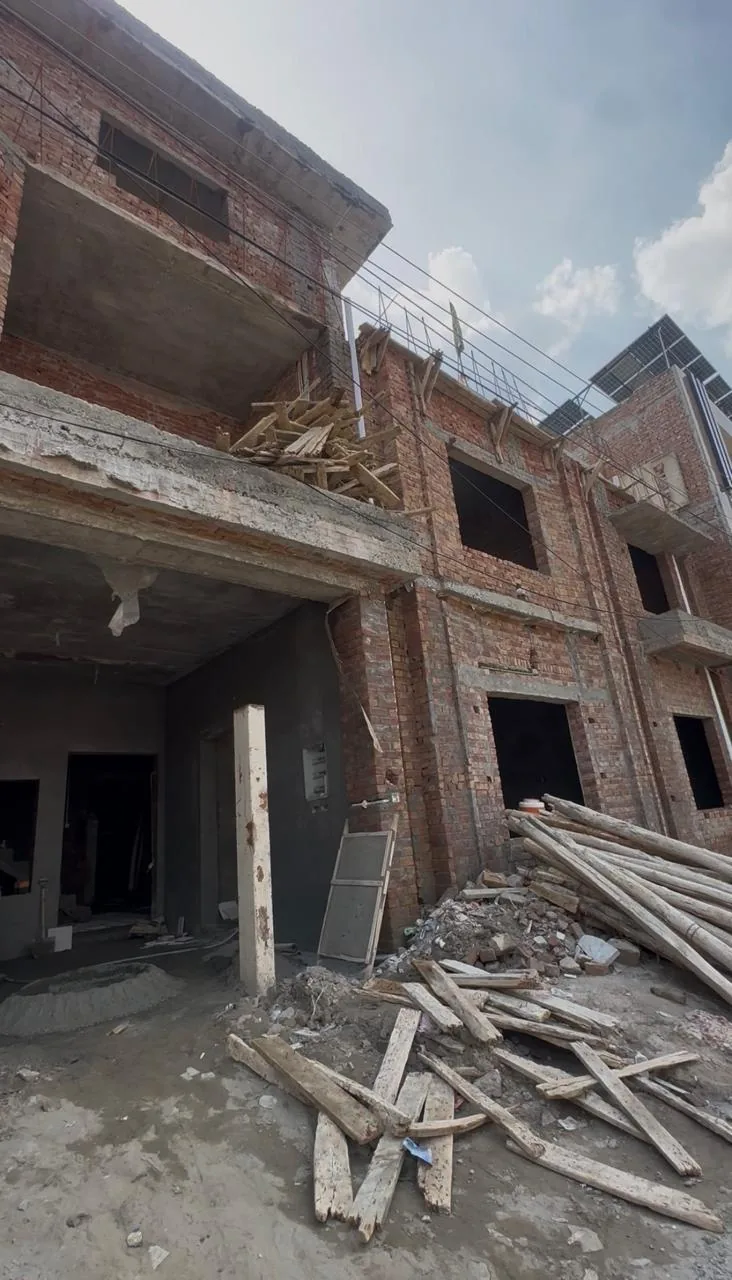
- Shuttering Material: Are they using clean steel plates with proper supports, or rusty, bent iron sheets and rotting wooden planks that cause slab sagging?
- Concrete Curing: Are brick walls and newly poured concrete columns covered with wet burlap/jute bags, or are they dry and unwatered in the sun?
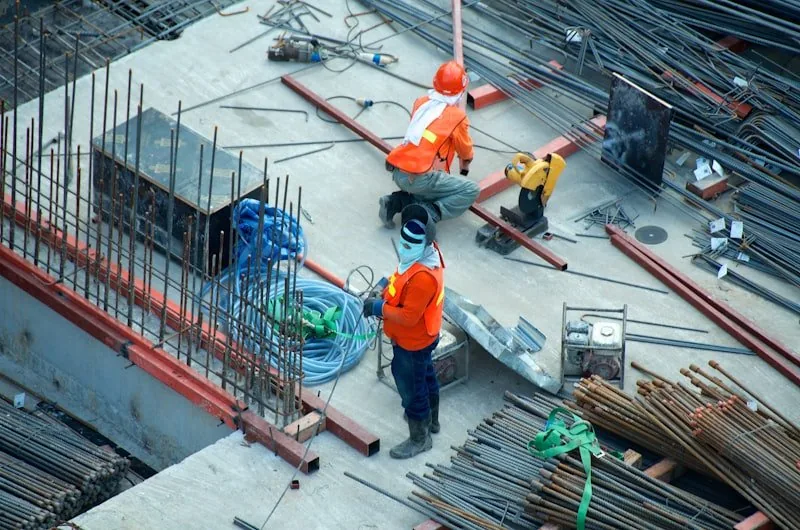
- Material Storage: Is cement stacked on wooden pallets off the damp ground? Is steel rebar stored away from mud to prevent pre-pour corrosion?
What written warranties do you provide for structural integrity and dampness/seepage?
Why This Matters: In Punjab’s climate, basement dampness (seepage) and bathroom plumbing leaks destroy expensive interior woodworks within months. Local petty contractors disappear the moment keys are handed over.
What to Demand: Insist on a written guarantee: a minimum 5 to 10-year structural warranty on the reinforced concrete (RCC) skeleton, and a 1-year operational defect liability period for waterproofing membranes, DPC, and sanitary pipe joints.
What is your milestone payment schedule, and what is your upfront advance demand?
Why This Matters: When a contractor demands 30% to 50% upfront before digging has started, they are using your money to fund someone else’s unfinished house.
The Safe Milestone Standard: Never pay more than 10% to 15% mobilization advance. Tie all subsequent disbursements directly to physical, measurable milestones: (1) Foundation completion, (2) Ground floor slab casting, (3) First floor slab casting, (4) Brickwork completion, (5) Plaster handover, and (6) 5% retention held until 30 days after moving in.
Who will supervise my site on a daily basis—a qualified engineer or a rotating mistri?
Why This Matters: An executive contractor or firm owner may impress you during initial boardroom meetings, but if your site is left in the hands of an unsupervised labor sub-contractor, critical structural errors will occur during concrete pours.
What to Demand: Ensure your contract specifies that a PEC-licensed Civil Engineer or qualified Associate Engineer (DAE) conducts daily on-site checks, approves steel rebar binding before every slab pour, and manages concrete slump ratios (1:2:4 / 1:1.5:3).
How do you document and charge for design variations or extra works?
Why This Matters: During house construction, homeowners often decide to add an extra bathroom niche, change tile dimensions, or extend a terrace. Unscrupulous contractors use these small modifications to levy exorbitant penalty rates that inflate total costs by 20%.
The Golden Rule: The contract must state that “No variation work shall begin without a written Change Order signed by both client and engineer detailing the exact cost and timeline impact.”
Licensed General Contractor vs. Local Petty Contractor (Theka-daar)
| Evaluation Metric | PEC-Registered Turnkey Contractor | Unlicensed Local Theka-daar |
|---|---|---|
| Legal Accountability | Registered corporate entity, NTN, binding legal contracts. | Verbal promises or informal notebook stamps on non-judicial stamp paper. |
| Cost Transparency | Itemized Bill of Quantities (BOQ) with locked brand specifications. | Vague lump-sum quotes that lead to constant price escalation disputes. |
| Material Quality | Certified Grade-60 deformed steel, Chenab sand, factory-tested cement. | Often uses lower-grade rebar, unwashed local sand, and diluted mortar ratios. |
| Site Oversight | Full-time qualified Civil Engineers supervising daily activities. | Self-supervised labor with zero structural engineering calculations. |
| Timeline Adherence | Milestone charts with contractual delay liquidated damages. | Frequent multi-month delays as labor shifts between concurrent sites. |
| Structural Warranty | 5 to 10-year written warranty with post-handover defect liability. | Zero warranty once final cash payment is received. |
To inspect current market rates across Lahore and Faisalabad, see our dedicated breakdown of grey structure construction costs and verified turnkey rates.